17.09 – 07.11.26
Vernissage 17.09.26, 18h
16.09.26, 16h – 21h
Vernissage de l’exposition hors les murs — art contemporain & design historique, en collaboration avec la Maison Lasser
(Maison Lasser)
20.09.26, 14h30 – 15h30
Talk avec l’artiste et le curateur Danniel TOSTES
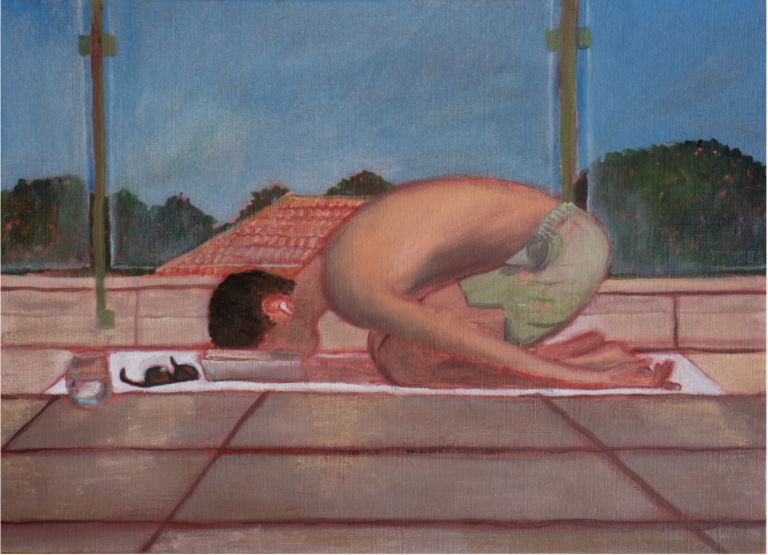
Unfamiliar, Luminous, Remote marque la première exposition personnelle d’Amit Berman à la galerie, à la suite d’une résidence d’artiste effectuée en Suisse plus tôt cette année. Réunissant un nouvel ensemble de peintures, l’exposition explore les notions d’intimité, de mémoire et de vulnérabilité à travers le geste, la texture et l’atmosphère.
Emprunté au roman Love Leda de Mark Hyatt le titre Unfamiliar, Luminous, Remote évoque des expériences d’étrangeté, des instants de révélation et les distances affectives qui façonnent les relations humaines. Entre intérieurs domestiques silencieux, fragments de paysage et figures solitaires suspendues entre ouverture et retrait, les peintures d’Amit Berman habitent cet espace incertain où se croisent familiarité, déracinement et doute.
Créées dans le contexte de la guerre, de précarité émotionnelle, ces œuvres témoignent d’une quête persistante de lien et d’appartenance au sein d’une réalité souvent instable. Les couches de peinture demeurent visibles, tandis qu’une gestuelle picturale expressive met en avant l’acte même de peindre.
Les compositions qui en résultent sont à la fois intimes et profondément habitées par une forme d’instabilité.
Légende : Amit BERMAN, The mirror is steaming up and reflects nothing, 2026, huile sur toile, 24 x 33 cm © Amit BERMAN